Lantmännen is an agricultural cooperative and Northern Europe’s leader in agriculture, machinery, bioenergy and food products.
As a global bakery company, Lantmännen Unibake has a special responsibility to contribute to a more sustainable food system. Food production and consumption account for approximately one third of global greenhouse gas emissions. Our main ambition is to reach net-zero GHG emissions across our value chain by 2050 with subsidiary goals in 2027 and 2030. That means big changes in our operations.
In 2021, we committed to the Science Based Targets initiative (SBTi). In July 2023, the SBTi approved our submission. Today, sustainability is incorporated into our business strategy and our SBTi’s are part of the overarching business ambition in Lantmännen Unibake.
Lantmännen Unibake has an annual footprint of approximately 800,000 tons CO₂e. Of these total emissions, 89% come from Scope 3 sources—emissions we do not directly control. A key contributor is the sourcing of flour, which accounts for 23% of all raw material emissions due to its high volume. As part of the Lantmännen cooperative, Unibake has direct access to more sustainable, eco-friendly flour options that help reduce the carbon footprint across our bakeries.
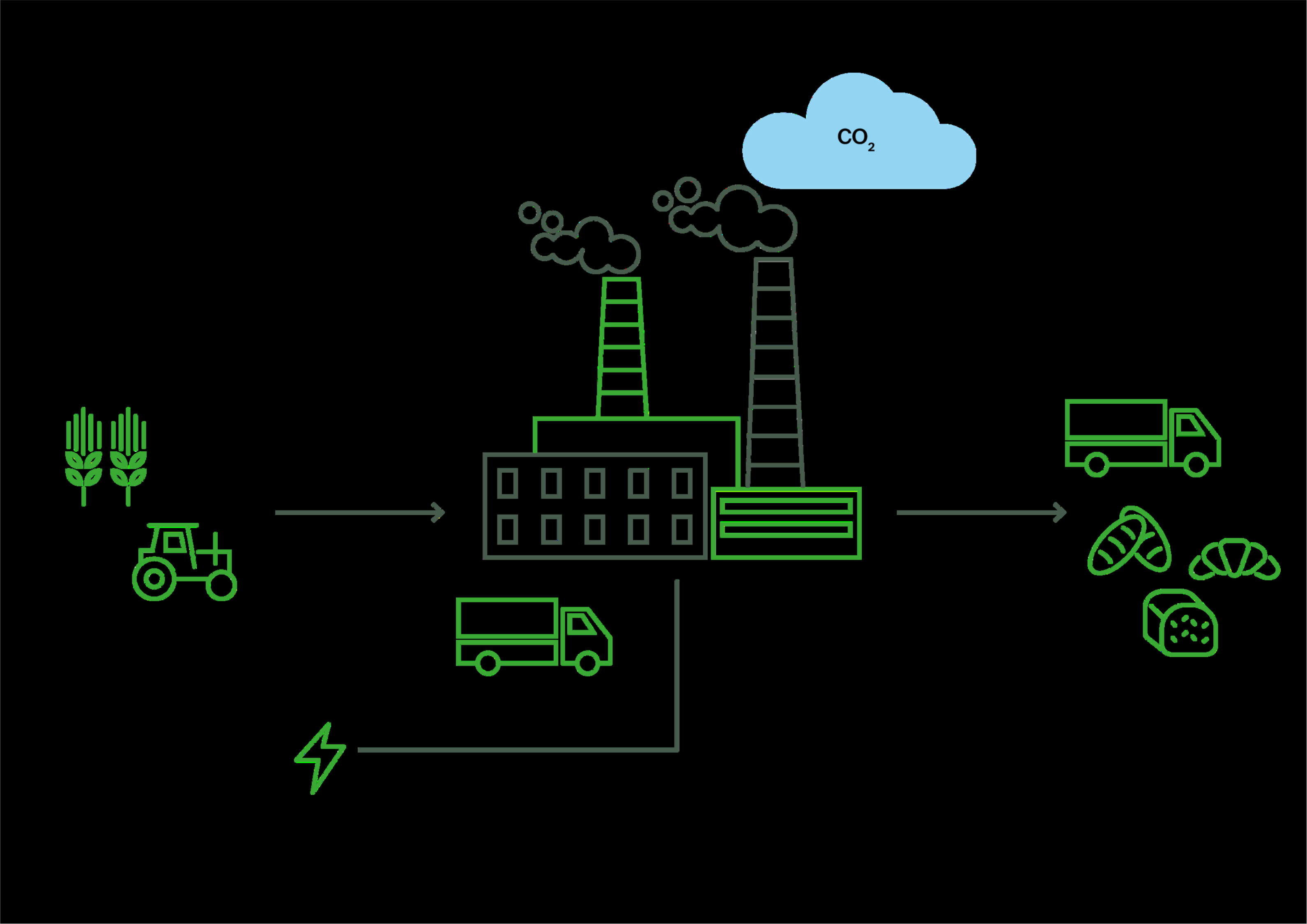
Emissions controlled through our own operations
Emissions caused from the energy consumption. We consume the energy, but CO2e is generated elsewhere
Emissions linked to our business activities, but not in our direct control. However, we can influence for example raw material production, transport, business travel etc.
For the climate, health, and people pillars in our sustainability plan, we have defined a set of crucial areas. Each crucial area presents an opportunity for us to improve our operations and implement more sustainable practices. On climate, we have identified eight crucial areas.
With more than 30 bakeries across multiple countries, optimizing our logistics helps reduce travel distances, fuel use, and energy consumption, lowering our overall environmental impact.
Through packaging optimization we are customizing the size and thickness of our corrugated cardboard boxes and plastic bags. That means that we transport less air and more bread on every truck that leaves our warehouses.
Battling climate change is not a solo endeavor but a team affair. It requires understanding, collaboration, and a little bit of pressure to push the agenda forward and create results. By 2030, Lantmännen Unibake has committed to reducing absolute Scope 3 GHG emissions from our assets and services by 30%.
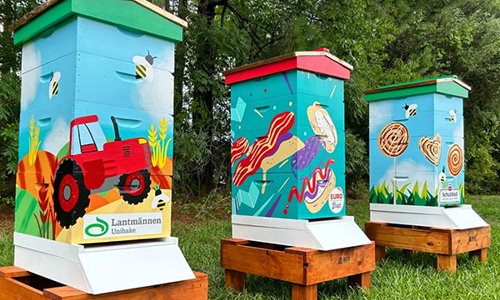
Addressing climate change requires collaboration and collective action. Through partnerships such as our collaboration with Bee Downtown, we support climate-focused initiatives that help reduce environmental impact and advance more sustainable food systems.
Lantmännen Unibake is actively driving programs and initiatives to reduce emissions across our operations—explore our featured articles to see how we’re putting our climate commitments into action.